
Textile Digital Product Passport (DPP)
The EU’s Digital Product Passport Registration System launched on July 20, 2026; rules specific to textiles are expected to be adopted toward the end of 2027. Every manufacturer shipping textile products to the EU market will be required to compile information on materials, origin, environmental data, and product lifespan into a single verifiable record. USB Certification guides you through the entire process, from data preparation to independent verification.

What is Textile DPP?
The Digital Product Passport (DPP) is a structured and verifiable digital identity that accompanies a product throughout its lifecycle. This record contains information about the product’s composition, where it was manufactured, its environmental impact, and what will happen to it at the end of its useful life. A QR code, NFC tag, or RFID tag embedded in the product opens the record; consumers, recyclers, brand owners, and regulatory authorities each access the same data within the scope of their respective authorizations.
Its legal basis is the Ecodesign Regulation for Sustainable Products, which entered into force in 2024—that is, ESPR (EU) 2024/1781. The ESPR is a framework regulation; it establishes general principles, while product-specific rules are set out in secondary legislation known as delegated acts. Textiles are one of the priority product groups. According to the Commission’s timeline, the delegated act specific to textiles is expected to be adopted in the second half of 2027. The textile sector is now debating what data must be prepared, in what format, and by when.
From Türkiye’s perspective, the picture is clear: A textile manufacturer exporting to the EU will be required to provide data as part of the supply chain, even if it is not established in the EU. Buyer brands will request this data from their suppliers to create their own passports. The material and traceability data you collect for the DPP also fulfills a significant portion of the due diligence requests these same brands will make under the CSDDD; you set up the data infrastructure once and use it to meet multiple regulatory requirements.
What’s inside the passport?
The ESPR framework specifies the following data categories for the textile passport; which fields will be mandatory and which will be optional will be finalized when the textile delegated act is published.
Composition and Materials
Types of raw materials, mixing ratios, and a breakdown of the components that make up the product.
Durability and Repairability
The product’s service life, maintenance instructions, repair options, and availability of replacement parts.
Unique product identifier
A unique identifier assigned to each product, batch, or model; the key to the passport and the reference for the registration system.
Origin and Supply Chain
Where and by whom the product is manufactured; supplier visibility from Tier 1 to Tier 3.
Substances of Concern
Declaration regarding hazardous chemical content and substance information under REACH.
Data carrier
Linking a physical product to a digital record using a QR code, NFC, an RFID tag, or GS1 Digital Link.
Environmental footprint
Data on environmental impacts related to carbon footprint, water usage, and production processes.
Recyclability and Service Life
Recycled content ratio, recyclability, and service life guidelines.
Registration and verification
Entry of the product into the EU DPP Registration System, which was launched on July 20, 2026; verification of the registration by customs and market surveillance authorities.
Compliance Calendar and Key Dates
1
2024, ESPR in Effect
The Ecodesign Regulation for Sustainable Products (EU) 2024/1781 has entered into force. The legal basis for the DPP has been established, and textiles have been listed as a priority product group.
2
2025: The Rules Are Taking Shape
The JRC conducted stakeholder consultations for the textile sector; work was carried out on data requirements and CEN-CENELEC technical standards. Technical preparations for the registration system were completed during this period.
3
July 20, 2026: The EU Registration System has been launched
The DPP Registration System has become operational; the Implementing Regulation and the decision regarding the six DPP standards have been published. Manufacturer registrations are being conducted using EU Login and an eIDAS-qualified electronic signature.
4
February 18, 2027: DPP Mandatory for Batteries
The first requirement under the EU Battery Regulation (2023/1542) takes effect; this includes batteries for electric vehicles, light-duty vehicles, and industrial applications. For imported products, customs authorities can verify compliance through the registration identifier on the battery passport.
5
Second half of 2027, textile delegated act
According to the Commission’s schedule, the adoption of the delegated acts on textiles, aluminum, and rubber is expected. Mandatory and optional data fields will be finalized by this date; implementation will begin following the transition period.
6
2028 and Beyond
The Commission’s timeline includes regulations on furniture in 2028 and on mattresses and recycled content in 2029. Textile requirements will also take effect during this period.
The dates are based on the Commission’s indicative timeline and may be updated depending on the legislative process. Companies that begin preparing their data now, rather than waiting for the regulations to take effect, will be able to manage the transition period in a planned manner rather than under pressure.
Plan your Textile Passport now
Being prepared when the Delegated Act is published is much more cost-effective than starting to collect data on that very day. USB Certification will assess your current situation and develop a customized roadmap for you. Contact us for a free strategic scoping consultation.
Preparing for the DPP in Four Steps
1. Map Your Products
List the textile lines, product groups, and suppliers of each component covered by the scope. This will help you determine where to start.
2. Collect the data
Compile information on materials, origin, maintenance, and circularity from your supply chain. Your existing certifications—such as GRS, GOTS, and OCS—serve as verified data sources at this stage.
3. Configure and connect
Convert disorganized tables and supplier declarations into a machine-readable standard passport format. Integration with ERP and PLM systems is established at this stage.
4. Publish and keep it up to date
Create the passport and register it in the EU Registration System; attach the QR or RFID tag to the product; and update the registration as regulations change. The DPP is a living record; it evolves along with the product.
What does USB Certification offer?
The Registration System links your product’s identifier to the address where your data is hosted. To gain access to the EU market, that data itself must be accurate and independently verified; this is the responsibility of an accredited conformity assessment body.
Through the Lean DPP Transition & Certification program, developed in collaboration with USB Certification and Beyond Bar Code, the process—from raw data to a verified, market-ready passport—is managed under one roof.
Regulatory Analysis
Assessing the impact of the ESPR framework and sector-specific EU regulations on your company.
Data and Supply Chain Mapping
Supplier visibility from Tier 1 to Tier 3, BOM (Bill of Materials) traceability, and collection of lifecycle data.
Digital Identity Architecture
QR and NFC-based product identification, secure infrastructure, and integration with existing systems.
Preparation for Certification
As a conformity assessment body accredited by TÜRKAK and IOAS, we provide independent verification of your product claims and documentation ready for audit.
SME Fast Track
8–10 weeks
It aims to achieve rapid adaptation using existing capacity without requiring unnecessary IT investment.
OEM Advanced Track
12–16 weeks
It establishes an enterprise-scale DPP architecture with deep integration with ERP, PLM, and MES systems, designed for multi-site operations.
Frequently Asked Questions
Check Our Other Services

Textile and Recycling Certification
USB Certification offers textile and recycling certification services. Contact our team of experts to learn…

Textile Exchange Materials Matter Standard
USB Certification supports sustainable raw material production and processing, aligning with the Textile Exchange Materials…

PPWR Compliance: EU Packaging and Packaging Waste Regulation
Support for heavy metal and PFAS testing, recyclability assessments, technical dossiers, and the EU Declaration…

PPWR Status Assessment Report
Find out if your packaging portfolio is ready to meet PPWR requirements. Apply now to…
You may be interested in these topics (Newsletter & News)
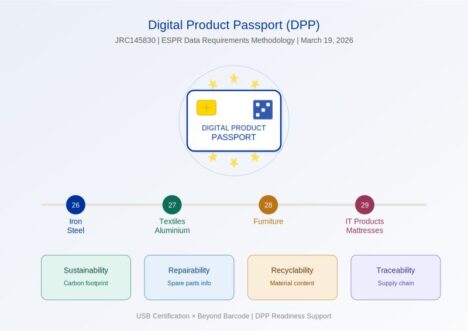
New Methodology Outlines Data Requirements for the Digital P…
New methodological guidance on data requirements for the Digital Product Passport (DPP). Start preparing your…
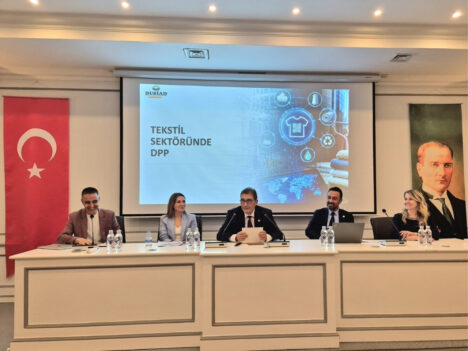
Digital Product Passport Meets Bursa Industry in Partnership…
Bursa embraces the future of trade! The Digital Product Passport, in partnership with USB Certification,…

EU Ecodesign Enters New Phase: Destruction of Unsold Clothin…
EU Ecodesign bans unsold clothing disposal. Digital Product Passport registration is open. Contact us for…

USB Certification Met with the Industry at the 7th Aegean Te…
USB Certification connects with the industry at the Aegean Textile and Apparel Suppliers Conference. Learn…