
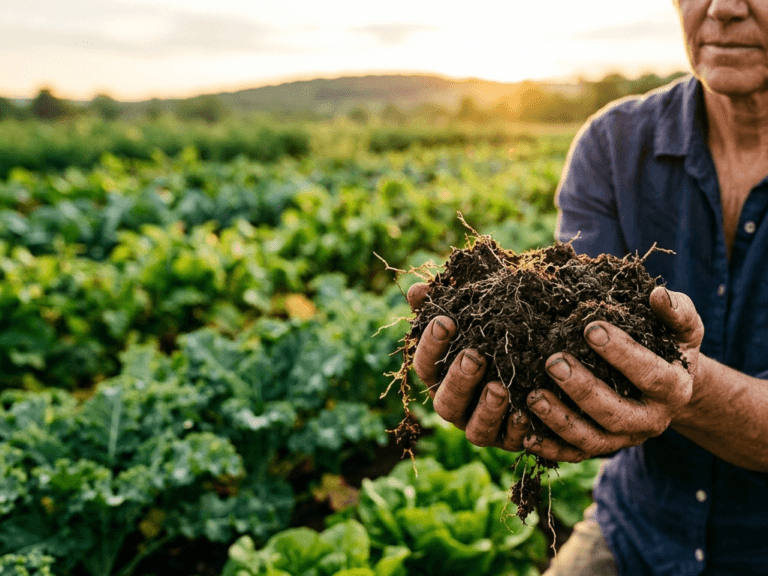
New Soil Health Guide for Farmers Published
Discover sustainable farming practices with the new Soil Health Guide. Increase productivity by interpreting soil indicators. Click here for details.
The Organic Research Center has published a comprehensive guide aimed at monitoring and improving soil health, which is the cornerstone of agricultural production. The guide, which enables farmers to accurately interpret and evaluate soil indicators, aims to promote the widespread adoption of sustainable agriculture and the creation of ecosystems resilient to the climate crisis.
To increase productivity in agricultural production and preserve ecological balance, the sustainability of soil health is becoming increasingly critical. The Organic Research Center, which continues its scientific research to address this need, has shared its new “Soil Health Guide”—which farmers can use directly in the field—with the public.
Soil Indicators Will Now Be Easier to Interpret
This guide, which serves as an important reference for all farmers who use both traditional and modern farming methods, allows them to track changes in their fields based on scientific data, yet in practical terms.
Thanks to the new guide, farmers can:
- who will be able to interpret the soil parameters and physical and chemical indicators of their land more effectively,
- be able to assess the direct effects of the soil tillage, irrigation, and plant nutrition methods they use on soil structure,
- They will have the opportunity to develop environmentally friendly agricultural practices best suited to their own land.
Focus on Productivity, Carbon Sequestration, and Climate Resilience
The study highlights that healthy soil not only increases crop yields per acre but also plays a key role in combating the global climate crisis.
The guide notes that soils rich in organic matter and with preserved microbial activity have a much higher carbon sequestration capacity. It also emphasizes that this healthy soil structure makes agricultural lands much more resilient to the destructive effects of climate change, such as drought or sudden changes in rainfall patterns.
You may be interested in these topics (Newsletter & News)
Çiftçiler İçin Yeni Toprak Sağlığı Rehberi Yayımlandı
Yeni Toprak Sağlığı Rehberi ile sürdürülebilir tarım uygulamalarını keşfedin. Toprak göstergelerini yorumlayarak verimliliği artırın. Detaylar…

Rainforest Alliance Updates Sustainable Agriculture Standard
The Rainforest Alliance has updated its sustainable agriculture standard. Learn more about the new standards…
New Era in Organic Agriculture from the EU Council: Simplifi…
EU Council streamlines organic farming regulations, reducing producer burden & strengthening oversight to boost consumer…
Check Our Other Services
Agriculture
Consulting services for sustainable and safe agriculture, adhering to international standards. Learn more about our…
Organic Agriculture Certification
Take your products to national and international markets with organic farming certification. Apply now for…
Agriculture Certification
USB Certification provides agricultural certification services under the authority of Türkiye's Ministry of Agriculture and…