
Digital Product Passport Meets Bursa Industry in Partnership with USB Certification
Bursa embraces the future of trade! The Digital Product Passport, in partnership with USB Certification, is now in the industrial sector.
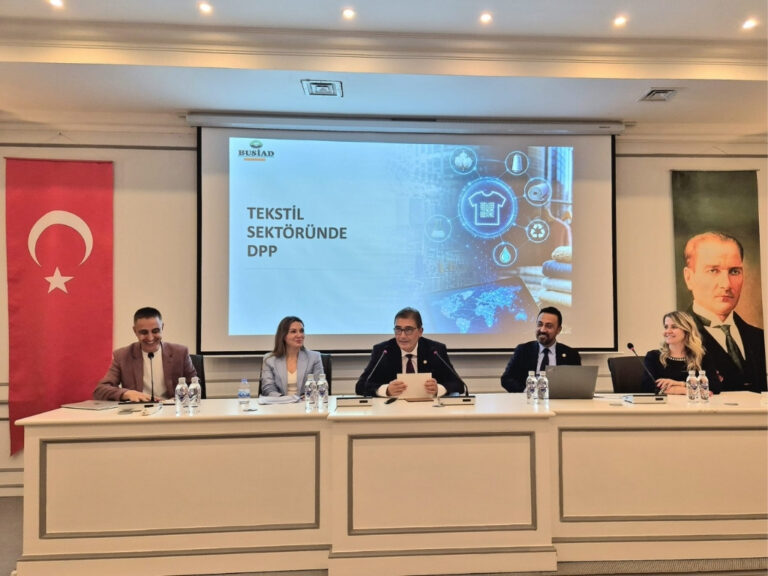
The “DPP Agenda | Bursa 2026 – From Regulation to Practice” event, held at BUSİAD House on 15 September 2026, drew company representatives from a wide range of Bursa’s industrial sectors. Organised in partnership with the Republic of Türkiye Ministry of Trade, BUSİAD, Beyond Bar Code and USB Certification, the programme brought onto one stage the public authority tracking the regulation, the technology building the data infrastructure, the certification side producing the evidence, and the industry manufacturing the products.
The Digital Product Passport, introduced by the European Union under the Ecodesign for Sustainable Products Regulation (ESPR), is a digital identity that gives access to a product’s sustainability, traceability and compliance information through a data carrier on the product itself. The regulation directly concerns every company producing for the EU market, which accounts for roughly 43 percent of Türkiye’s exports. The event, hosted by the BUSİAD Textile Sector Working Committee, drew wide participation. All of Bursa’s main export sectors were in the room, from textiles and automotive to chemicals, electronics and batteries.
The private sector survey shared by the Ministry of Trade was a clear sign that the Digital Product Passport is being addressed at exactly the right time. Of the 331 companies surveyed across twenty sectors, 93 percent aim to export to the EU, yet only 9 percent have started preparing for the DPP. At the same time, 89 percent believe Türkiye should establish a similar mechanism of its own. The picture speaks for itself: awareness is high, preparation is not, and gatherings like this one have a clear role to play.

Data is now part of competition
BUSİAD Chair Tuncer Hatunoğlu opened the event and introduced the association’s structure. Barış Mert, BUSİAD Board Member and Head of the Textile Sector Working Committee, pointed to a quiet but powerful shift in world trade. Competition was fought for decades over cost, quality and delivery time, he said, and transparency has now joined that list. Bursa, he stressed, should not merely follow these developments but help set their direction.
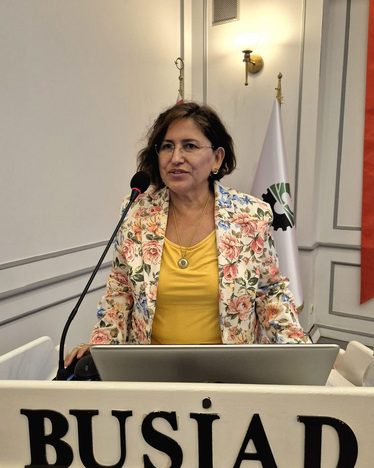
Our Founder and CEO Nesrin Serin drew on more than thirty years in conformity assessment to describe the shift as the third era of quality. “Our factories now produce two products. One is the product itself, the other is its data. And the second will be inspected as rigorously as the first.” Certifications in textiles became an order requirement through buyer demand rather than law, she recalled, and the DPP will follow the same path: claims will now be tied to evidence. Türkiye is Europe’s closest major production base, she added, and the supplier who presents verifiable data first will be the one buyers call first. Read correctly, the Digital Product Passport is an opportunity for Turkish exporters to move ahead.
The Digital Product Passport timeline: the first obligation arrives on 18 February 2027
In the training session, Beyond Bar Code CEO Suna Akbayır walked the audience through the DPP’s scope, sectoral timeline and technical workings. A product will no longer consist of just its label and barcode, she noted, and the regulation will shape trade well beyond the EU. What begins with batteries will reach other sectors in turn. Her message to the room was direct: “There is no need to panic, but you have to start working.”
Göksu Tülümen, Deputy Director General for Product Safety and Inspection at the Ministry of Trade, presented the EU’s DPP architecture, the central registry that went live in a test environment in July, and the 2026–2029 roadmap. The Digital Product Passport, he explained, is essentially the digital presentation of information that existing legislation already requires, a tool for traceability and transparency at the intersection of the green and digital transitions. Thanks to the Customs Union, products of Turkish origin have so far entered the EU market much like those of a member state. Tülümen warned that this advantage could be lost if compliance falls short, and advised companies to start collecting product data now rather than wait for the legislation to be finalised. Under the official timeline, the first legal obligation takes effect on 18 February 2027 for electric vehicle, light means of transport and industrial batteries. Sectoral requirements for textiles, aluminium and tyres are expected in the second half of 2027.
How should manufacturers prepare for the DPP: first steps from the panel
The second part of the event featured the panel “From Regulation to Practice – How Should a Manufacturer Prepare for the DPP?”, moderated by BUSİAD Vice Chair Hüsamettin Çoban. Göksu Tülümen, Barış Mert and Suna Akbayır were joined on the panel by our Industrial Services Director Emre Metin. Barış Mert offered a manufacturer’s view of the process, drawing on what he has seen in his own factory and across the textile sector.
Emre Metin argued that the DPP should be treated not as a software project but as a discipline of data and evidence, and outlined the first steps companies can take today: build a product and document inventory, start collecting data from the supply chain, and back every sustainability claim with verifiable evidence such as certificates and test results. How these steps apply to the textile sector is covered on our Textile Digital Product Passport (DPP) page. The hardest part, Metin noted, is obtaining data from the lower tiers of the supply chain. Intermediate products such as yarn and fabric fall outside the legal scope of the final product’s passport, yet the company creating that passport still depends on their data.
The panel closed with questions from the audience, and the speakers received their plaques from BUSİAD Chair Tuncer Hatunoğlu. The day left every company in the room with the same question about its own products: when, and how, does the DPP concern us?

The road continues
Our work on the Digital Product Passport continues in the field under the trilateral cooperation agreement we signed in May. Bursa was the first stop on the road we have taken to discuss this agenda with our industry. We are preparing similar gatherings in other manufacturing-intensive cities, and as sectoral regulations are published, we will keep what we present in step with that framework.
You may be interested in these topics (Newsletter & News)

USB Certification Met with the Industry at the 7th Aegean Te…
USB Certification connects with the industry at the Aegean Textile and Apparel Suppliers Conference. Learn…
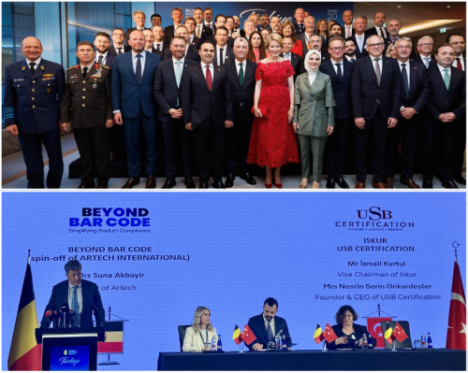
USB Certification Signed a Trilateral Cooperation Agreement…
USB Certification signs 3-party deal for Digital Product Passport. Discover EU compliance and sustainability solutions…

“Digital Product Passport Solutions and Regulations (T…
Explore our webinar on Digital Product Passport (DPP) solutions and regulations for the textile, recycling,…

Product Safety Week Kicks Off in Türkiye: USB Certification…
USB Certification took center stage at Product Safety Week with the theme "Product Safety in…
Check Our Other Services

Textile Digital Product Passport (DPP)
Ensure compliance with sustainability standards in the EU market with the Textile Digital Product Passport…

PPWR Compliance: EU Packaging and Packaging Waste Regulation
Support for heavy metal and PFAS testing, recyclability assessments, technical dossiers, and the EU Declaration…

Republic of Türkiye Ministry of Trade
USB Certification, a Type B International Inspection Company authorized by Türkiye's Ministry of Trade. Trade…