
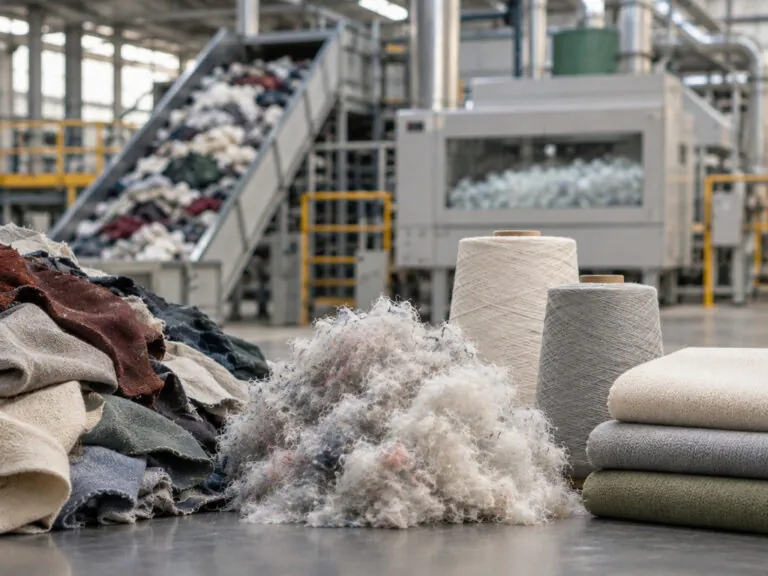
Textile Exchange projects 3-5 million tonnes of textile-to-textile recycled fibre supply by 2030
On 6 October 2026, Textile Exchange published “Textile-to-Textile Recycled Fiber Availability Data for Apparel and Home Textiles”, a report assessing the current and future availability of textile-to-textile recycled fibres for apparel and home textiles. Developed with Fashion for Good, Reverse Resources and TEXroad, the report brings together previously fragmented data on textile waste and recycling capacity. Textile Exchange describes it as the first global approach to this assessment.
According to the report, the volume of recycled spinnable fibre could rise from an estimated 1-1.5 million tonnes in 2025 to 3-5 million tonnes in 2030. This growth is driven primarily by large-scale expansion plans from a small number of polyester recyclers. Over the same period, recyclable textile feedstocks are projected to grow from around 10 million tonnes to 15 million tonnes.
The gap between feedstock and fibre volumes shows that only a portion of available feedstock can become recycled fibre, as collection, sorting, processing and technology constraints limit how much can be produced. Even under these growth scenarios, the report projects that textile-to-textile recycled fibres will represent only a modest share of total fibre demand in apparel and home textiles by 2030.
The study covers post-industrial and post-consumer textile waste, mechanically and chemically recycled fibres, and cotton, polyester, nylon, manmade cellulosic fibres, wool and their blends. Non-textile feedstocks such as leather, down and plastic bottles were excluded, as were technical textiles.
Textile Exchange presents the findings as an initial, directional view based on the best available data, with conservative assumptions intentionally applied where data was limited. The organisation plans to refine the model as more data becomes available from recyclers and suppliers, and intends to integrate the work into its annual Materials Market Report.
You may be interested in these topics (Newsletter & News)
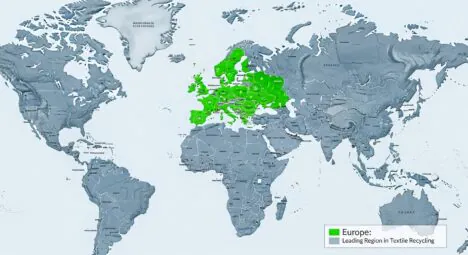
Global Textile Recycling Market to Reach $20 Billion by 2031
The global textile recycling market is growing. Contact USB Certification for sustainable fashion and circular…
Textile Exchange Publishes Materials Market Report 2026: Glo…
Textile Exchange's 2026 Materials Market Report reveals a record increase in global fiber production. Contact…
TEXTILE EXCHANGE ANNOUNCES 2024 MATERIALS MARKET REPORT
Explore record growth in global fiber production & synthetic fiber dominance in the Textile Exchange…
Global Fiber Production Reaches Record High: “Textile…
Textile Exchange has published its Materials Market Report 2025, revealing the rise in raw material…
Check Our Other Services

Textile Exchange Materials Matter Standard
USB Certification supports sustainable raw material production and processing, aligning with the Textile Exchange Materials…
Textile and Recycling Certification
USB Certification offers textile and recycling certification services. Contact our team of experts to learn…

Textiles and Recycling
Boost your competitive edge with sustainability certification for textiles and recycling. Contact us for export-recognized…