
Textile Exchange Publishes Materials Market Report 2026: Global Fibre Production Hits a Record 139 Million Tonnes
Textile Exchange’s 2026 Materials Market Report reveals a record increase in global fiber production. Contact us to learn more.
According to Textile Exchange’s Materials Market Report 2026, published on 22 September 2026, global fibre production reached a record 139 million tonnes in 2025, up from 132 million tonnes in 2024. The increase was driven by virgin fossil-based fibre production, which rose from 81 million tonnes to 86 million tonnes.
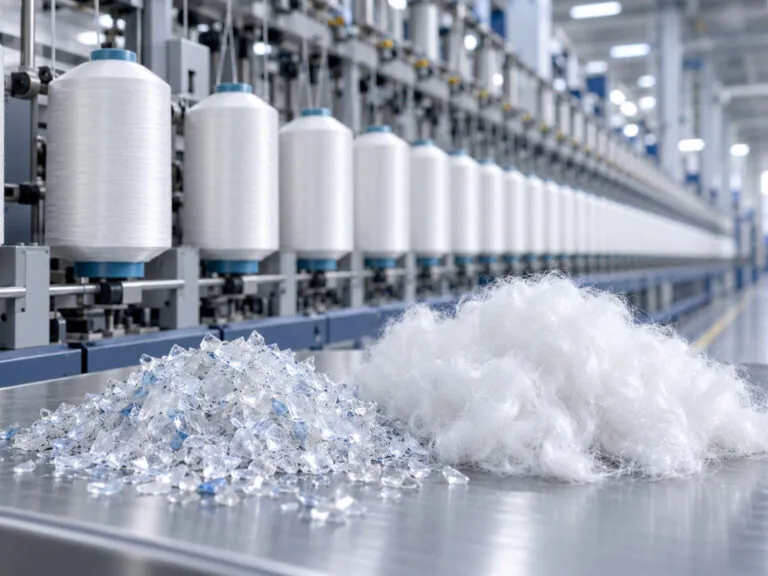
Polyester accounted for 59% of global fibre production with 82.5 million tonnes, of which 72.8 million tonnes (88%) was virgin fossil-based polyester. Recycled polyester production rose from 9.4 million tonnes to 9.7 million tonnes, 97% of which came from plastic bottles. Textile-to-textile recycled fibre production across all fibres rose from 0.61% in 2021 to 0.76% in 2025. Cotton ranked second with an 18% share, while man-made cellulosic fibres accounted for 7% and animal fibres for 1% in total.
Cotton from certified programmes reached 9.4 million tonnes, or 37% of all virgin cotton, compared with 8.4 million tonnes (35%) in 2024. Production of certified greasy wool under the Responsible Wool Standard (RWS) rose from 70,389 tonnes (3.8% of global greasy wool) to 79,135 tonnes (4.5%).
According to the organisation’s Materials Benchmark data, the share of cotton, polyester, polyamide (nylon), viscose and wool sourced from sustainability programmes by the 384 participating brands and retailers rose from 68% in 2024 to 72% in 2025, while the share of preferred production systems in the global production of these fibres across all industries is 20%. The share of recycled sources in the polyester used by participants rose from 67% to 76%, while this share remained flat at 12% in global production. According to Textile Exchange’s modelling, greenhouse gas emissions of the apparel, home textiles, bags and footwear sectors reached a new high in 2025 at approximately 325 million tonnes CO2e, around 30% higher than the 2019 baseline. The full report is available on the Textile Exchange website.
You may be interested in these topics (Newsletter & News)
TEXTILE EXCHANGE ANNOUNCES 2024 MATERIALS MARKET REPORT
Explore record growth in global fiber production & synthetic fiber dominance in the Textile Exchange…
Global Fiber Production Reaches Record High: “Textile…
Textile Exchange has published its Materials Market Report 2025, revealing the rise in raw material…

Textile Exchange Publishes Its 2025 Annual Report: Certified…
The Textile Exchange 2025 Report has been published. The number of certified facilities has exceeded…

Textile Exchange Unveils Landmark Report on the Future of Sy…
Discover the sustainable textile transformation with Textile Exchange’s “The Future of Synthetics” report. Download it…
Check Our Other Services

Textile Exchange Materials Matter Standard
USB Certification supports sustainable raw material production and processing, aligning with the Textile Exchange Materials…

Global Responsible Textile Standard (GRTS)
What is GRTS, which fibers are suitable, how it differs from GOTS, certification in 6…

Textiles and Recycling
Boost your competitive edge with sustainability certification for textiles and recycling. Contact us for export-recognized…