
Empowering Consumers for the Green Transition Directive Enters into Application: Sustainability Labels Not Based on Certification Prohibited
EU Green Deal Directive is active! Non-certified sustainability labels are banned. Learn more at USB Certification.
The European Union’s Empowering Consumers for the Green Transition Directive (Directive (EU) 2024/825) entered into application on 27 September 2026. According to the European Commission, the Directive is intended to ensure that consumers receive better information at the point of sale on the durability, reparability and legal guarantee rights of products, and to strengthen protection rules against greenwashing and early obsolescence practices. To support implementation, the Commission published an updated Questions and Answers document on 22 September 2026.
The Directive extended the list of unfair commercial practices prohibited in all circumstances. One of the practices added to the list is displaying sustainability labels that are not based on a certification scheme or not established by public authorities. Generic environmental claims for which the trader is not able to demonstrate recognised excellent environmental performance relevant to the claim, and claiming, based on the offsetting of greenhouse gas emissions, that a product has a neutral, reduced or positive impact on the environment, are now also among the prohibited practices.
The Directive defines a certification scheme by four criteria: the scheme must be open under transparent, fair and non-discriminatory terms to all traders willing and able to comply with the requirements; the requirements must be developed by the scheme owner in consultation with relevant experts and stakeholders; procedures for dealing with non-compliance and the withdrawal or suspension of the use of the label must be set out; and the monitoring of compliance must be subject to an objective procedure and carried out by a third party whose competence and independence from both the scheme owner and the trader are based on international, EU or national standards.
National authorities in the Consumer Protection Cooperation (CPC) Network agreed in June 2026 on a common understanding regarding “old stock” products manufactured, ordered, distributed or placed on shelves before 27 September. Accordingly, traders are expected to take timely and good-faith steps to comply with the new rules. Authorities, in turn, may adopt a phased approach where genuine and specific transitional difficulties arise, particularly in the early stages of application, and may not require disproportionate measures such as the destruction or recall of products. The updated Questions and Answers document is available on the European Commission website.
You may be interested in these topics (Newsletter & News)

Tüketicilerin Yeşil Dönüşümde Güçlendirilmesi Direktifi Uygu…
AB Yeşil Dönüşüm Direktifi yürürlükte! Sertifikasyona dayanmayan sürdürülebilirlik etiketleri yasaklandı. Detaylı bilgi için USB Certification.

European Union : New ‘Green Claims’ Directive to…
European Union : New ‘Green Claims’ Directive to Combat Greenwashing The European Union has been…
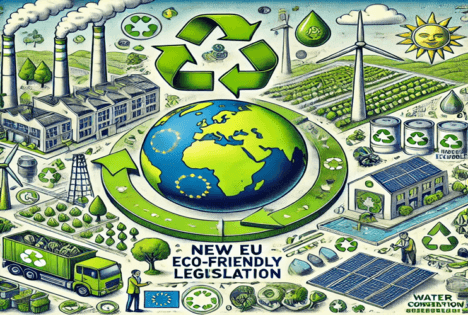
New EU Legislation Enhances Consumer Trust in Eco-Friendly P…
Show your products' environmental performance with the EU Ecolabel. Contact us for new EU regulations…

EU Ecodesign Enters New Phase: Destruction of Unsold Clothin…
EU Ecodesign bans unsold clothing disposal. Digital Product Passport registration is open. Contact us for…
Check Our Other Services

PPWR Compliance: EU Packaging and Packaging Waste Regulation
Support for heavy metal and PFAS testing, recyclability assessments, technical dossiers, and the EU Declaration…

GMO (Genetically Modified Organism) Free
Ensure your products are GMO-free with the GMO-FREE Turkish Cotton standard. Contact USB Certification for…

Textile Exchange Materials Matter Standard
USB Certification supports sustainable raw material production and processing, aligning with the Textile Exchange Materials…