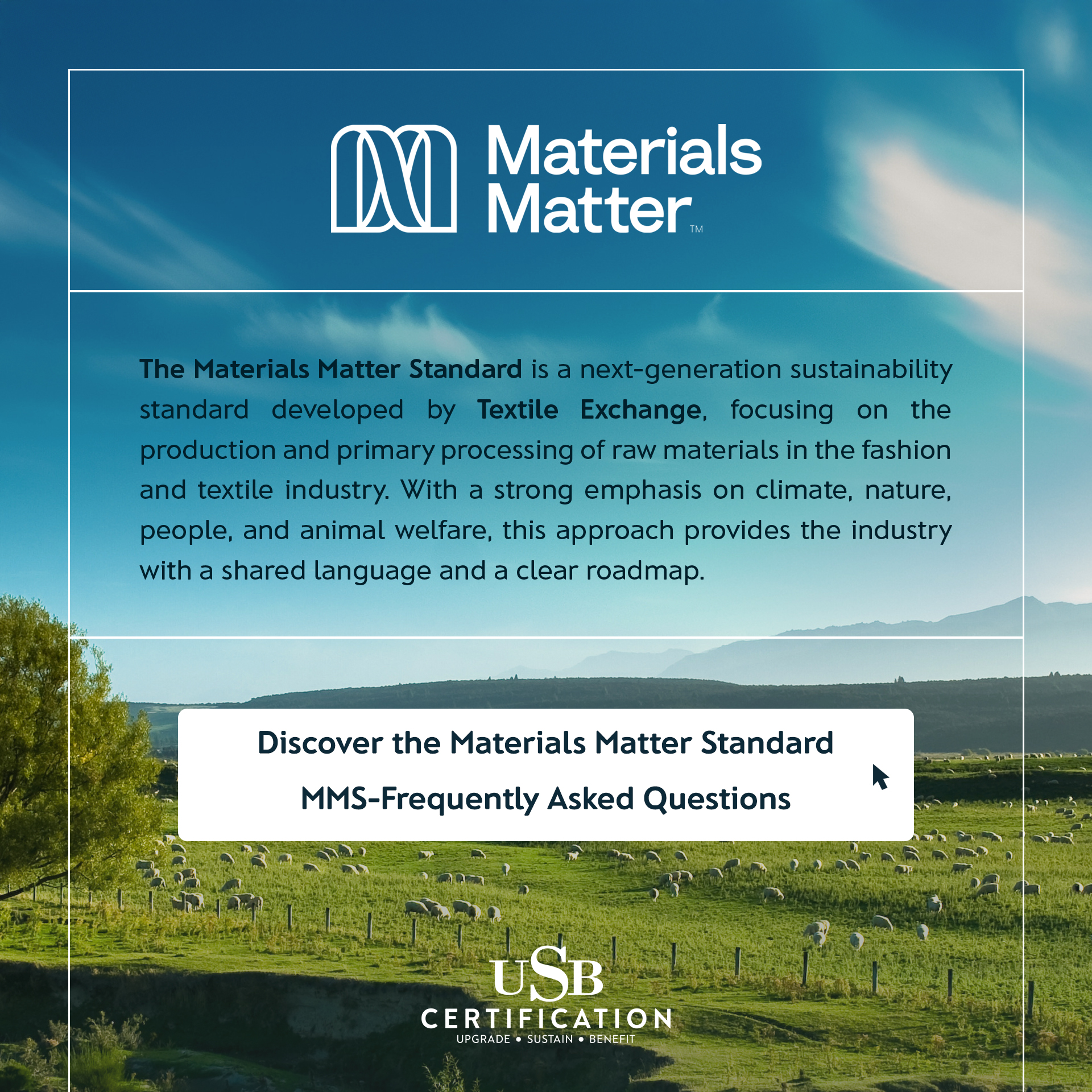
Textile Exchange officially published the Materials Matter Standard (TE-MM-STN-101 V1.0) on 12 December 2025. This comprehensive sustainability standard has been developed for raw material production and primary processing within the fashion, textile, and apparel industries. The new standard is designed to promote climate action, nature protection, human rights, and animal welfare at the earliest stages of the supply chain, with the aim of creating a more aligned and transparent global textile standards system.
The Materials Matter Standard introduces an integrated approach by consolidating existing individual certification systems under a single framework. This framework establishes applicable criteria for sustainable raw material production and primary processing, balancing practical implementation with outcome-oriented objectives. The scope of the standard extends from farms and raw material extraction to collection and primary processing facilities. The standard includes practical requirements across critical areas such as environmental impact mitigation, biodiversity management, water and soil health, human rights and working conditions, animal welfare, and chemical management.
The comprehensive structure of the official documentation provides guidance to raw material producers seeking to align their operations with sustainability principles. The standard becomes effective on 31 December 2026, while mandatory implementation is planned for 31 December 2027. From this date onward, conformity assessments against the standard may be conducted, and existing raw material certification systems will be replaced by this new comprehensive framework.
In developing the Materials Matter Standard, Textile Exchange collaborated with the International Working Group (IWG), bringing together academics, producers, brands, civil society organizations, and supply chain stakeholders. The new standard is positioned as a tool to strengthen sustainable raw material production while enhancing transparency and accountability across the sector. This approach not only aims to reduce the environmental and social impacts of raw material production but also supports long-term positive change in the textile industry by establishing a shared language and common measurement criteria for sustainable materials.