Textile Exchange Publishes the First Comprehensive Life Cycle Assessment Study for Cashmere
Textile Exchange has published the first comprehensive Life Cycle Assessment study on cashmere. Click here to view the detailed report.
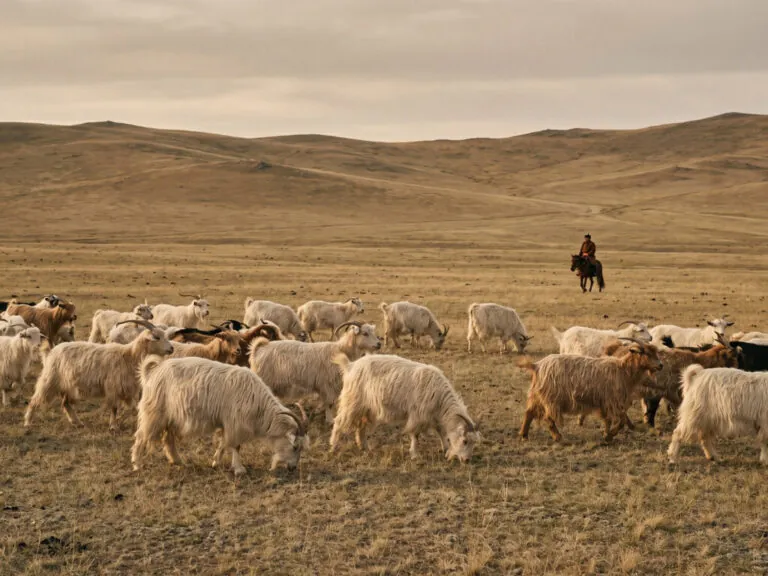
Textile Exchange has published its Cashmere Life Cycle Assessment (LCA) Study, the latest in its series of LCA studies designed to improve the quality of environmental impact data for raw material production. The organisation states that the report, which it believes to be the first widely available cashmere LCA study of its kind, provides the cashmere-specific data the industry has long needed.
Prepared with a cradle-to-gate approach, the study covers all processes associated with cashmere production and primary processing. Data was collected directly from 170 herders and farmers operating in both farmed and nomadic grazing systems in Mongolia and China, the world’s two largest cashmere-producing countries. Through Textile Exchange’s LCA+ approach, the analysis also includes soil health and a separate social assessment examining community, livelihoods and human rights.
According to the study’s key finding, within its scope and assumptions, the main drivers of environmental impact are herd-level productivity indicators, such as cashmere yield per animal, and management practices, including winter supplementary feeding, rather than the type of production system. Severe winter conditions known as “dzuds” in Mongolia and Inner Mongolia were found to increase environmental impacts by reducing productivity and raising animal mortality. The study recommends that brands prioritise supplier support and targeted interventions improving animal and land management, rather than shifting towards a single production system.
The study’s data will be submitted throughout 2026 and 2027 to the Higg MSI, Ecoinvent and WALDB databases, to serve as proxy data in cases where source-specific LCA data is not available.
You may be interested in these topics (Newsletter & News)
Textile Exchange Publishes Cotton Life Cycle Assessment Stud…
Textile Exchange's cotton LCA study examines environmental impacts and sustainable production systems. Click here for…

Textile Exchange Publishes New Life Cycle Assessment Data fo…
Textile Exchange has published new Life Cycle Assessment data evaluating the environmental impacts of polyester.…
Textile Exchange, İşlenmemiş ve Geri Dönüştürülmüş Polyester…
Textile Exchange, polyesterin çevresel etkilerini değerlendiren yeni Yaşam Döngüsü Değerlendirmesi verilerini yayımladı. Detaylar için tıklayın.
SFA Hosts “Cashmere Connect 2025” to Strengthen…
In February, the Sustainable Fibre Alliance (SFA) successfully hosted the annual “Cashmere Connect 2025” event,…
Check Our Other Services
Cotton Consumption Measurements
Validate your cotton consumption measurements in accordance with BCI standards. Contact us today to achieve…

Textile Exchange Materials Matter Standard
USB Certification supports sustainable raw material production and processing, aligning with the Textile Exchange Materials…

Responsible Alpaca Standard (RAS)
Ensure ethical alpaca production, animal welfare, and a transparent supply chain with RAS certification. Contribute…